
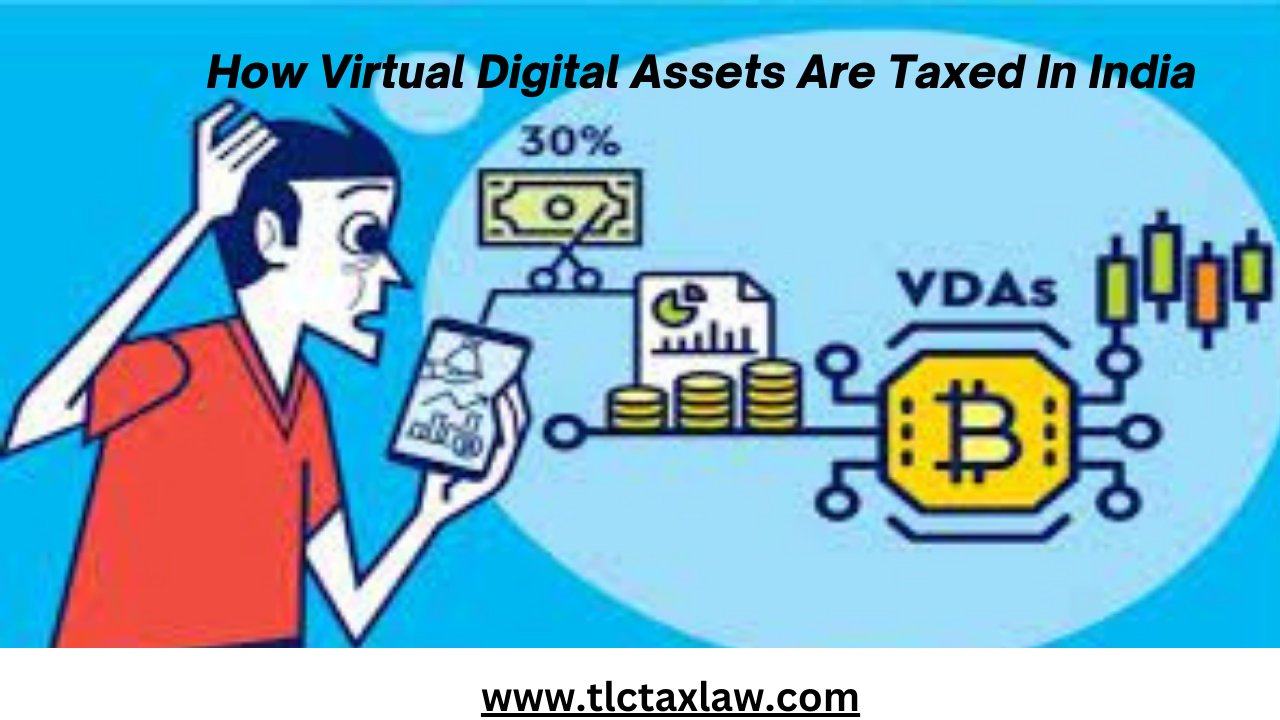
What does Virtual Digital Assets Include?
The definition of VDA as given under section 2(47) of the Act, is an inclusive definition. However, the Central Government may, vide a notification, exclude any digital asset from the definition of VDA.
VDA as defined under the Act inter alia, includes:
A. Any cryptographically generated Information/Code/Number/token
not being Indian or foreign, having an exchange value represented in digital form, exchanged with or without consideration, with the promise or representation of having inherent value; or functions as a store of value or a unit of account,
that may be used in any financial transaction or investment, and can be transferred, stored, or traded electronically.
B. NFT or any other token of similar nature; or
C. Any other digital asset as may be notified by Central Government.
An Exclusion from the definition of Virtual Digital Assets:
The Central Government has excluded following digital assets from the definition of VDA through a notification :
1. Gift card or vouchers that may be used to obtain goods or services or discounted goods or services;
2. Mileage points, reward points or loyalty cards without monetary consideration and that may be used only to obtain goods or services or discounted goods or services;
3. Subscription to website or platforms or application; or
4. Any NFT backed by an underlying tangible asset where transfer of such NFT results in legally enforceable transfer of ownership of such tangible asset.
When does Tax Liability Arise?
Under the Income Tax Act:
- Where a person receives a VDA without consideration and the fair market value of that VDA exceeds INR 50,000 – the entire fair market value of the asset is considered taxable income in the hands of the person who received the VDA. The applicable rate of tax will depend on the income tax bracket within that person ordinarily falls;
- Where a person receives a VDA for consideration lower than the fair market value, and the fair market value exceeds the consideration by more than INR 50,000 – the difference between the fair market value and the consideration paid is considered taxable income in the hands of the person who received the VDA. The applicable rate of tax will depend on the income tax bracket within that person ordinarily falls;
- Where a person earns income from the transfer of a VDA – the income earned by that person less the cost of acquisition, if any, is subject to tax at the rate of 30%. Additionally, an equalization levy of 2% will be levied on the non-resident owner of the blockchain on which NFTs are traded.
How will the Income from VDA be taxed?
The Finance Act, 2022 has inserted Section 115BBH in the Act to bring VDA under tax.
As per the calculation of gain on transfer method given under Section 115BBH, there is a metaphoric representation of taxing of gains arising upon transfer of VDA similar to that on transfer of any other capital asset. However, the law has not restricted the nature of holding of VDA to a "Capital Asset" alone. Hence, any gain on transfer of VDA held as stock-in-trade or otherwise shall also be taxed as per the provisions of Section 115BBH.
Further, any VDA received against no or low consideration would be taxed in the hands of recipient as Income from Other Sources", as per the specific provisions of section 56(2)(x) of the Act.
Computation of gains on transfer of VDA
For computation of gains on transfer/ sale of a VDA, the cost of acquisition of such asset must be deducted from its sale price.
Full value of consideration xxx
Less: Cost of Acquisition (XXX)
Taxable gains on transfer of VDA xxx
Notes :
- The law does not allow any other form of deduction except the cost of acquisition of such VDA for computation of gains arising out of the transfer.
- The law has categorically denied any benefits of indexation or cost of improvement with respect to computation of gains on the sale/ transfer of VDA.
Any Set-Off or Carry Forward of Losses ?
The Income Tax Act expressly prohibits the set-off of losses from transfers of VDAs against income or gains derived from other VDAs.
For Example, if a person were to sell an NFT and incur a loss, the loss cannot be set-off against a gain made on the transfer of another VDA. Illustratively, if A sells an NFT artwork for a loss of INR 10,000 and then sells units of Ethereum for a profit of INR 50,000, A would be liable to tax on the entire profit of INR 50,000 from the sale of Ethereum and would not be able to set-off the loss of INR 10,000 on the NFT.
Essentially, under the Income Tax Act, gains and income from VDAs are taxable but no relief is provided in the event losses are incurred, and, to that extent VDAs are taxed differently than most other assets in India.
What is Rate of Tax on gain on transfer of VDA ?
The gain on the transfer of VDA is to be taxed at a flat rate of 30%, plus cess and surcharge.
What Is Tax Deducted At Source For VDA ?
Section 194S was inserted vide Finance Act, 2022 for withholding of tax on transfer of VDA. The details are as follows:
TDS must be deducted at earliest of:
1. making payment (by any mode); or
2. crediting of such sum to the account of the resident
Tax does not need to be deducted where:
- The consideration is paid by a “specified person” and the aggregate value of the consideration being paid does not exceed INR 50,000 during the financial year; or
- The consideration is paid by a person other than a “specified person” and the aggregate value of the consideration being paid does not exceed INR 10,000 during the financial year.
A “specified person” is defined as an individual or Hindu undivided family:
- whose total sales, gross receipts or turnover from the business carried on by him or profession exercised by him does not exceed INR 1 crore in case of business or INR 50 lakhs in case of profession, during the financial year immediately preceding the financial year in which such VDA is transferred;
- that does not have any income under the head “profits and gains of business or profession”.
As a consequence, tax will generally need to be deducted at source by most persons acquiring VDAs unless they fit the criteria of “specified persons” or only make purchases of VDAs infrequently and for small amounts.
Primary Concerns With Tax On VDA:
The new taxation regime introduced by the Government does not appear to take into account the nuances of cryptocurrencies and NFTs. Prior to the amendment of the Income Tax Act, experts in India and elsewhere had raised questions as to how cryptocurrencies and NFTs should be classified – capital assets, currency, securities, etc. An analysis of the nature of each category of VDAs is crucial to the formulation of a clear and effective tax regime.
- At present, the Income Tax Act treats cryptocurrencies, NFTs and other VDAs homogeneously. While both cryptocurrencies and NFTs use DLT and blockchain technology, the similarities end there. Cryptocurrencies are, by their very nature, fungible while NFTs are not. Cryptocurrencies have limited application. NFTs, on the other hand, can be deployed in a number of ways – as art, instruments, certificates of ownership, etc.
- The fact that the Income Tax Act does not address the characteristics of VDAs and how they can be acquired and utilized could lead to confusion. Illustratively, if cryptocurrency is acquired through mining, is it considered to have been transferred to the recipient and, therefore, subject to the 30% tax? Alternatively, is it considered a receipt of a VDA without consideration making the fair market value of that VDA taxable in the hands of the miner? While experts have differing views on how the receipt of VDAs pursuant to mining will be taxed, the fact remains that the law does not address or clarify the position.
- The new taxes imposed on VDAs appear to be aimed at discouraging investment in such assets. The tax rate of 30% – applicable irrespective of the income bracket of the taxpayer – is similar to that imposed on other assets of which the Government appears to disapprove such as lottery winnings. The refusal to permit any deductions other than cost of acquisition, or to permit the set-off of losses, and the requirement to deduct tax are further evidence of the intention to discourage investments in VDAs.
- The Government has not prescribed the manner in which VDAs ought to be valued despite linking the imposition of tax in certain cases to the fair market value of the relevant asset. This will invariably lead to disputes and further reduce faith in the Indian tax regime.
- Finally, the decision to tax VDAs is not indicative of the legalization of cryptocurrencies or NFTs in India. In India, assets acquired through the proceeds of crime are subject to tax. Similarly, assets acquired in an illegal fashion (benami property or undisclosed foreign assets) are also taxed. The mere incidence of taxation cannot be interpreted as legitimization or legalization of VDAs.
This article is for general information only and is not legal advice. For advice on your specific facts, please contact The Lord's Consultancy.